

Trump Knows There’s No Substitute For Victory
Unlike experts, he has learned from mistakes in the Middle East

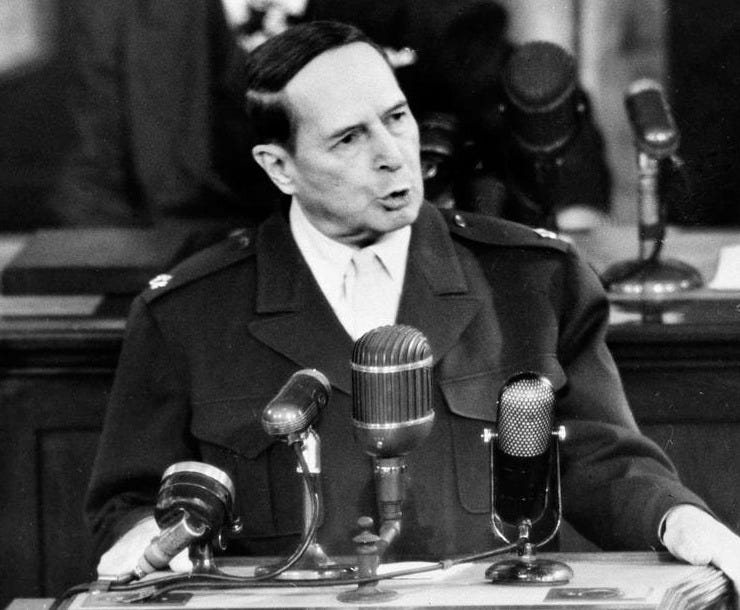
“In war there can be no substitute for victory.” So said General Douglas MacArthur in 1951, just as the United States was unfortunately getting into the business of tying or losing wars, instead of winning them.
On Friday, President Donald Trump updated the objectives of the Iran War, announcing that he will accept only unconditional victory:
“There will be no deal with Iran except UNCONDITIONAL SURRENDER! After that, and the selection of a GREAT & ACCEPTABLE Leader(s), we, and many of our wonderful and very brave allies and partners, will work tirelessly to bring Iran back from the brink of destruction, making it economically bigger, better, and stronger than ever before. IRAN WILL HAVE A GREAT FUTURE. “MAKE IRAN GREAT AGAIN (MIGA!).” Thank you for your attention to this matter! President DONALD J. TRUMP”
Some will say the decision is reckless, but “bold” and “daring” are better descriptions.
Some will say Trump is using his trademark maximalist language and will just as easily declare victory and leave in a few weeks, saying he did his best for the Iranian people but their best just wasn’t good enough. But I doubt it.
Trump’s move will have the immediate benefit of driving political opponents even more bananas. That applies not only to the disloyal Democrats and the liberal media, most of whom are rooting desperately for failure, but the non-interventionists on the social media right who exist in a parallel universe where perhaps their lamentations have political consequences unlike here.
More importantly, even as he is accused of repeating the mistakes of past U.S. interventions in the Middle East and forever wars, he is in fact doing the opposite. At long last, Trump is aligning U.S. military strategy with the political outcome that is necessary for long-term security in the Arabian Gulf.
The ultimate fault of U.S. policy in the War on Terror was failing to trace terrorism back to its root political-cultural causes. Had that been done, President George W. Bush would not have offered the public the irrelevancy of Islam being a “religion of peace.” He would have said that in addition to neutralizing jihadists like al Qaeda, we would suppress the Islamist political ideology that animates both violent jihadists and non-violent Islamist subversives. This suppression would have included both Sunni and Shia branches of political Islam, represented most prominently by the Muslim Brotherhood (a.k.a. Hamas) and the Iranian regime, respectively. (Greasing Saddam and Iraqi Ba’athism would have still been on the checklist.)
It was not to be.
But Trump is, to borrow a phrase from his 2024 opponent Kama-lama-ding-dong, “unburdened by what has been.” From Gaza to Tehran, Trump is seeking a durable political outcome that backfoots or deposes those who love killing Americans. As ever, Trump is the alternative to decades of failed policy crafted by highly credentialed boobs.
Total victory is an uncommon objective or outcome in war. Aside from the destruction of ISIS as an organized force in Trump’s first term, the last time it was achieved by a U.S.-led coalition was during the 1991 Gulf War, if one accepts the coalition’s stated objective of ejecting Iraqi forces from Kuwait.
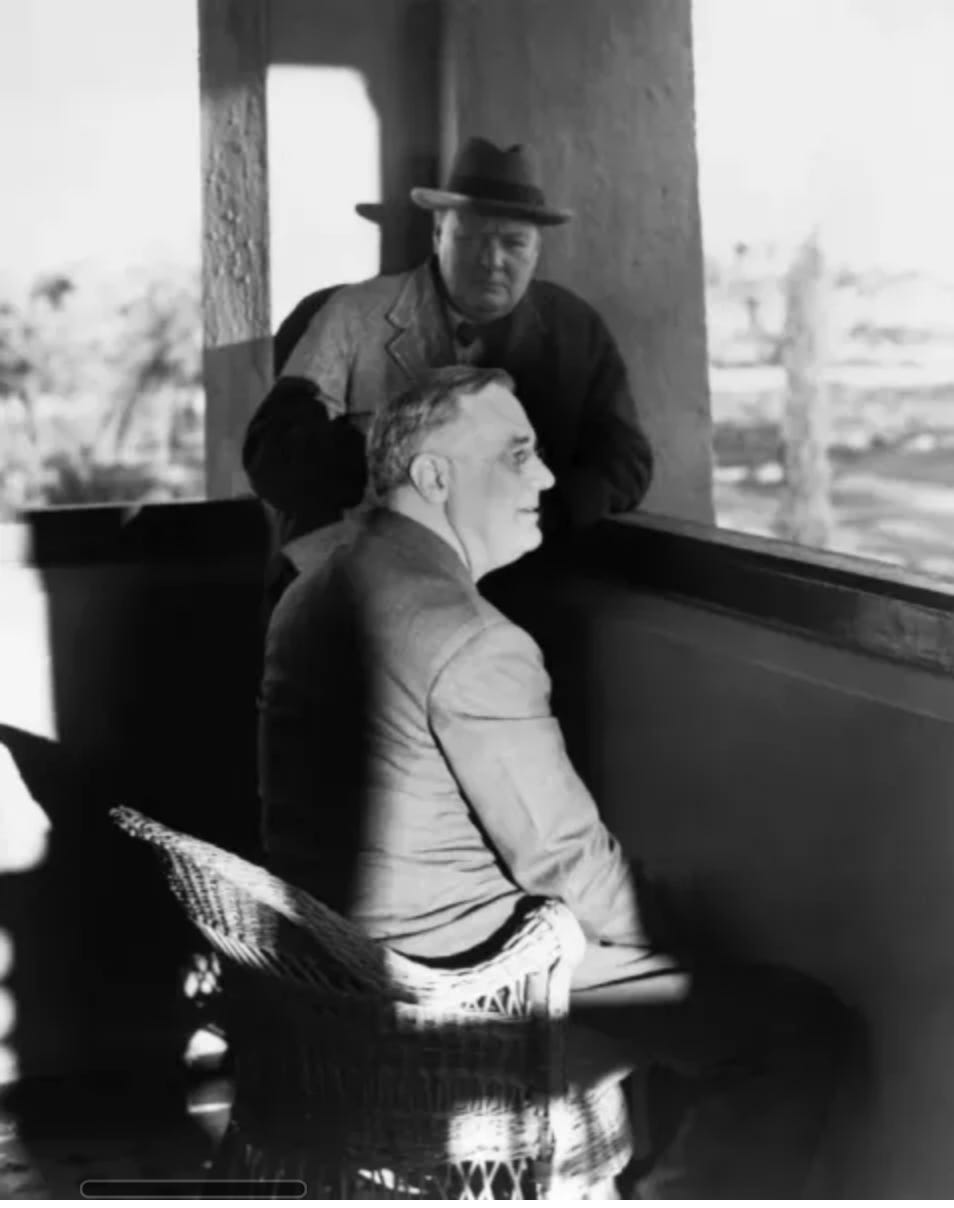
Before that, there was of course World War II. Germany started the war in Europe in 1939. The United States and Britain did not agree to seek Germany’s unconditional surrender until President Franklin Roosevelt and Prime Minister Winston Churchill met at Casablanca in January 1943. Soviet leader Joseph Stalin was concerned that the announcement would only embolden German resistance. But he accepted the plan when the Big Three met in Tehran at the end of that year.
While the unconditional surrender requirement extended to U.S. policy toward Imperial Japan, it was not formalized until the May 1945 Potsdam Declaration. Nor was it completely clear that the Soviets shared this objective until Moscow honored a secret agreement made at Yalta in February 1945 to join the Pacific War three months after victory in Europe.
In other words, ruling out a settlement to war that achieves only some objectives historically has not been taken lightly and should not be taken lightly today.
One presumes Trump understands the risks he is taking and has judged it a good gamble. In recent weeks, the administration shifted from emphasizing the imminent threat of Iran’s nuclear weapons project to spotlighting Iran’s ballistic missiles and drones that could allow the country to resume a nuclear weapons program with impunity. Stopping the regime’s malign activity outside of Iran and the parallel requirement of deposing the regime were in the “nice-to-do” category but not essential.
Now, the United States is not merely encouraging Iranians to take control of their destiny but placing that as the criteria for success. The decision has changed the nature and likely cost of the war, but also increased the upside for America. A future Iran with a secular, non-violent government would contribute to a dramatically safer world and an arc of prosperity and accountable government that runs from the United States through Northeast Asia to the Middle East.
My belief is that the President would not have taken this step without very positive military news. On Friday, Iran’s deputy foreign minister, Saeed Khatibzadeh, said his government had not closed the Strait of Hormuz but could. However, considering that Iran has attacked all of its neighbors, unifying the majority of Arab nations and even Turkey against it, one can presume the regime in unbounded and is not closing the Strait only because it cannot close the Strait.
To put it another way, the Iranian regime seems to have decided to go down in a blaze of glory. We are witnessing its end game as an organized military force.
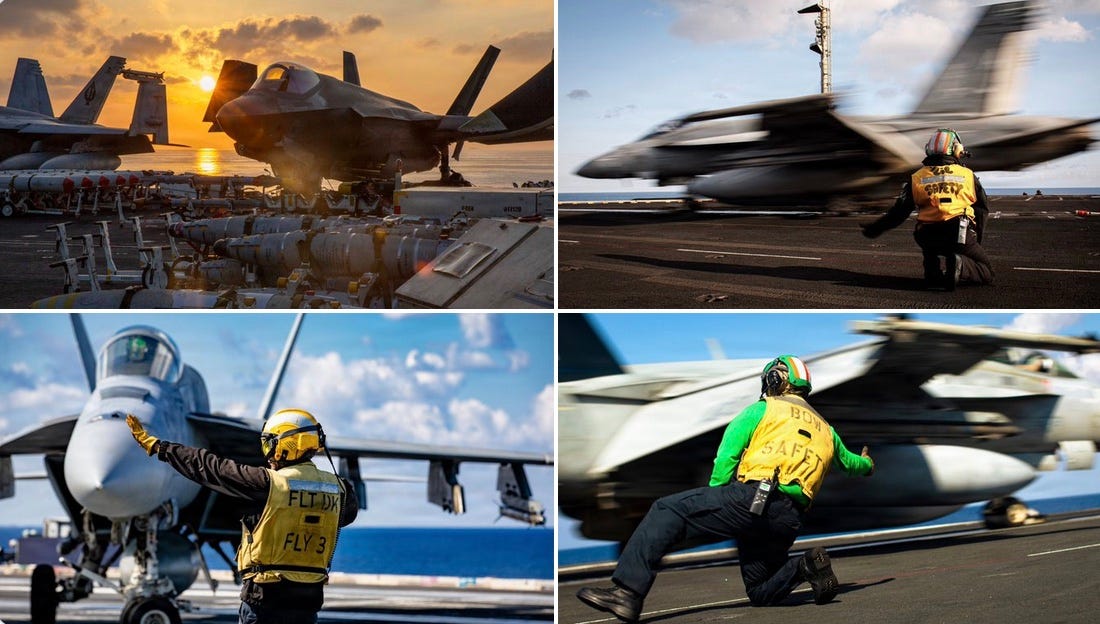
As Iran’s defenses are reduced along with its offensive drones and ballistic missiles, allied air and naval power can likely shift from hitting major military targets to targeting small units of Iranian Revolutionary Guards—the political terror army that Iran has similar to the German SS. This could boost any opposition to the regime that emerges, because allied forces could try to protect them or at least make regime stalwarts nervous to step outside or use telecommunications.
What Trump’s new objective means in practical terms is that the United States and allies will have to remain at least somewhat engaged in Iran for months or years. Were the United States to cease military activity with the regime still in charge or able to regain control, the success of severely impeding Iran’s military will be eclipsed by failure at what is now the primary mission.
There is already a debate over U.S. ground forces in Iran. You could make a drinking game over how often you hear “boots on the ground” in any given newscast, but you would be drunk all day. But some U.S. ground liaison with opposition forces may be inevitable given the President’s new objective. Better that ground presence be military—especially given the wealth of experience with counterinsurgency in Iraq—than CIA, State Department, or other intelligence operatives who have an unblemished record of being wrong about governance in the Middle East. (It would be interesting to read CIA assessments of what is occurring on the ground in Iran since the opposite is probably true, and to know of CIA advice, since one could then just do the opposite.)
“Beware of an old man in a hurry” goes the aphorism and warning. However, it does not just warn of impetuous decisions, but also foretells brash, determined resolve. Trump has almost three years left of his presidency. However, talk of midterms and his eventual successor undoubtedly drive him to resolve unfinished business and undertake big tasks now. If this were the Reagan administration, it would be 1986—pretty much peak Reagan.
Some speculate that Trump is making decisions to help Republicans win midterm elections, which also foretells a hasty exit from the Iran War, but I doubt that. While Trump obviously hopes Republicans keep both houses, the reality is that Congress is a failure today and will be a failure after elections—at least as long as the filibuster lasts in the Senate. Trump is free to decide what it best for the country in the long term, and his actions from the economy to trade to national security consistently show long-term planning irrespective of a desire for easy wins or daily logrolling in the swamp.
Trump has seemingly decided he will not leave behind an America threatened by Iran’s bloodthirsty, hated, theocratic, murderous tyrants.

I don't see any precedent for Trump's actions, and that is a good thing. No more of "This is the way we've always done it." Warfare has changed. I expect he will keep pounding until all that's left are the small targets, as you suggest. It's fascinating to see the Arab leaders coalesce around him. They were tired of disruptions by the radicals. Never step on the toes of MBS. Trump has completely rearranged the geopolitical chessboard.
The biggest problem?
The 20,000 Iranians most likely to rise up were killed 8 months ago ... when Trump did nothing to help them.
At best, this is going to look like Venezuela. Maybe a win and maybe not. Like Venezuela, it won't be clear which by November.
And that's very bad politically ... especially if the market is down and gas prices are up because of it.