

Swap Can Facilitate US-China Intercourse
Chicom boss Xi owes Trump

Will Trump continue to engage strongly with China, or will he pull out?
The ball is in Beijing’s court.
On Wednesday, the President held a “long and thorough” session with Chinese leader Xi Jinping as the two governments contemplate deeper diplomatic engagement ahead of a planned summit in April.
Trump characterized the call as “all very positive.”
Writing in The National Interest, I argue that Xi should make concessions given Trump’s moves toward détente.
Such steps could include an exchange involving dissidents—such as Jimmy Lai, whom Trump wants released—in parallel with Washington conditionally lifting sanctions on certain Chinese officials. That would help ensure the summit succeeds and bring this stage of diplomatic intercourse to completion.
Please take a look at the idea below. Feedback welcome.

A US-China Sanctions Trade?
February 4, 2026
By: Christian Whiton
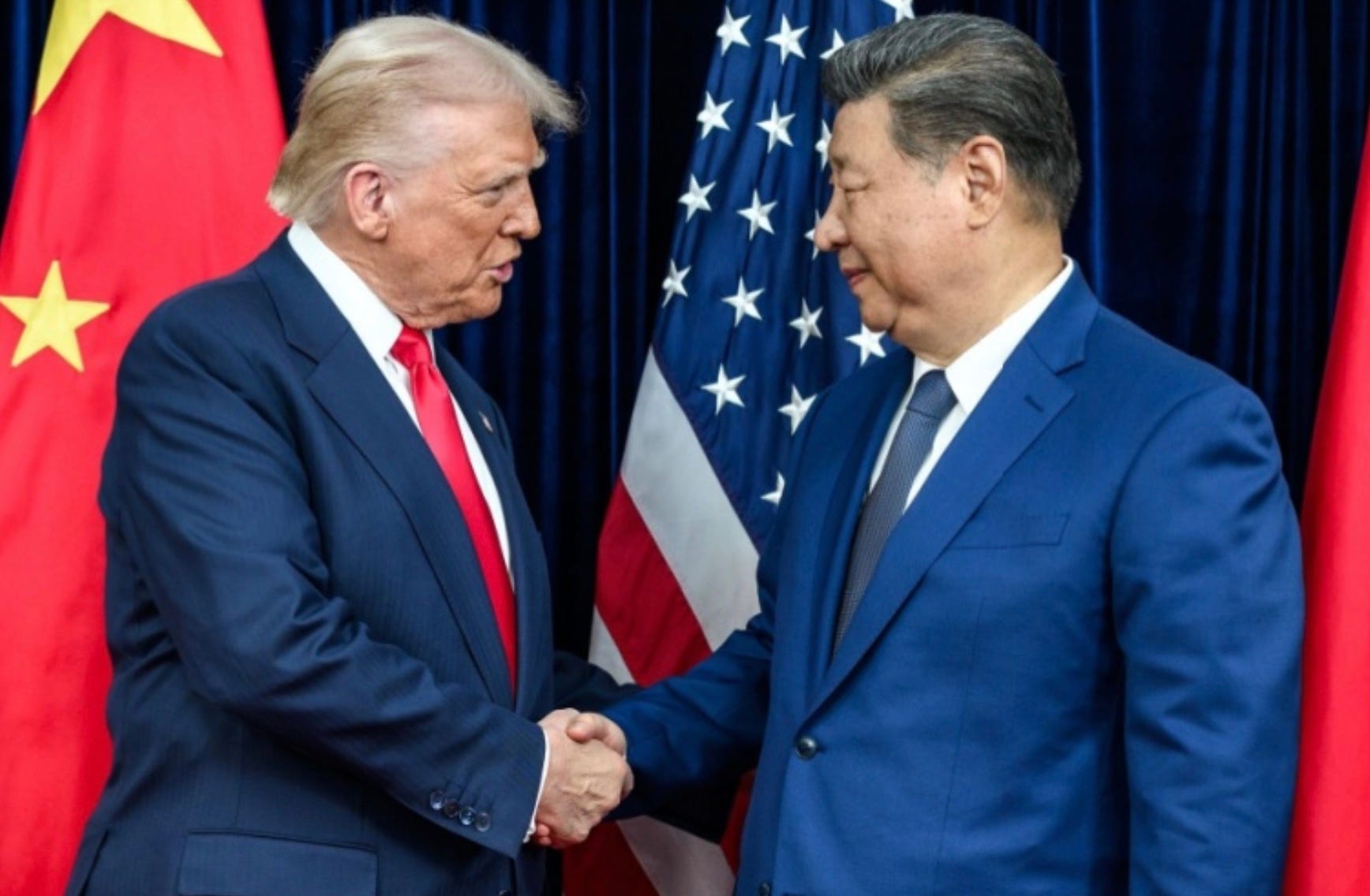
Few would argue that President Donald Trump has not been reasonable with the Chinese government and its leader, Xi Jinping. Ahead of an expected summit between Trump and Xi this spring, it is in Beijing’s interest to reciprocate. Counterintuitively, it should do so on the human rights front, setting up a measurable achievement for both governments.
At the beginning of Trump’s second presidential term, just over a year ago, the US-China relationship seemed destined for a prolonged crisis. During the campaign, Trump suggested a 60 percent tariff increase on top of elevated levels from his first term.
In April 2024, Trump lamented that the Chinese “…they steal our jobs, and they steal our wealth, they steal our country.”
During their confirmation proceedings, incoming Trump officials pulled no punches. Secretary of State Marco Rubio said China had “lied, cheated, hacked, and stolen” its way to superpower status. US Trade Representative Jamieson Greer centered his testimony around the “China shock” to the US economy and condemned as a “disastrous decision” the move that allowed Beijing nearly unfettered access to the US economy beginning in 2000. Commerce Secretary Howard Lutnick called China a central “strategic adversary.”
Yet from this aggressive posture—and partly because of it—Trump and Xi have found areas of cooperation and détente. Trump imposed a relatively modest additional 10 percent tariff on China because of the flow of illegal fentanyl into the United States.
Recent policy statements from the Trump administration, including its National Security Strategy and National Defense Strategy, have not ignored the serious military threat China poses. However, the administration has refrained from singling out China and has given equal emphasis to threats in the Americas.
Trump has also sought a middle ground on export controls for US technology, especially integrated circuits that form the heart of AI hardware. In August 2025, his administration licensed the export of Nvidia’s H20 AI processors designed specifically for the Chinese market. Then, in January 2026, it went a step further by allowing the limited export of Nvidia H200 and similar chips to China.
Throughout this process, China backed away from threats to stop exporting rare earth elements to the United States, which are crucial to much high-tech and military manufacturing. The Chinese government also agreed to increase its purchases of American soybeans.
Notwithstanding these Chinese actions, Beijing ought to make a strong gesture of goodwill if it wants Trump’s moderate path to continue.
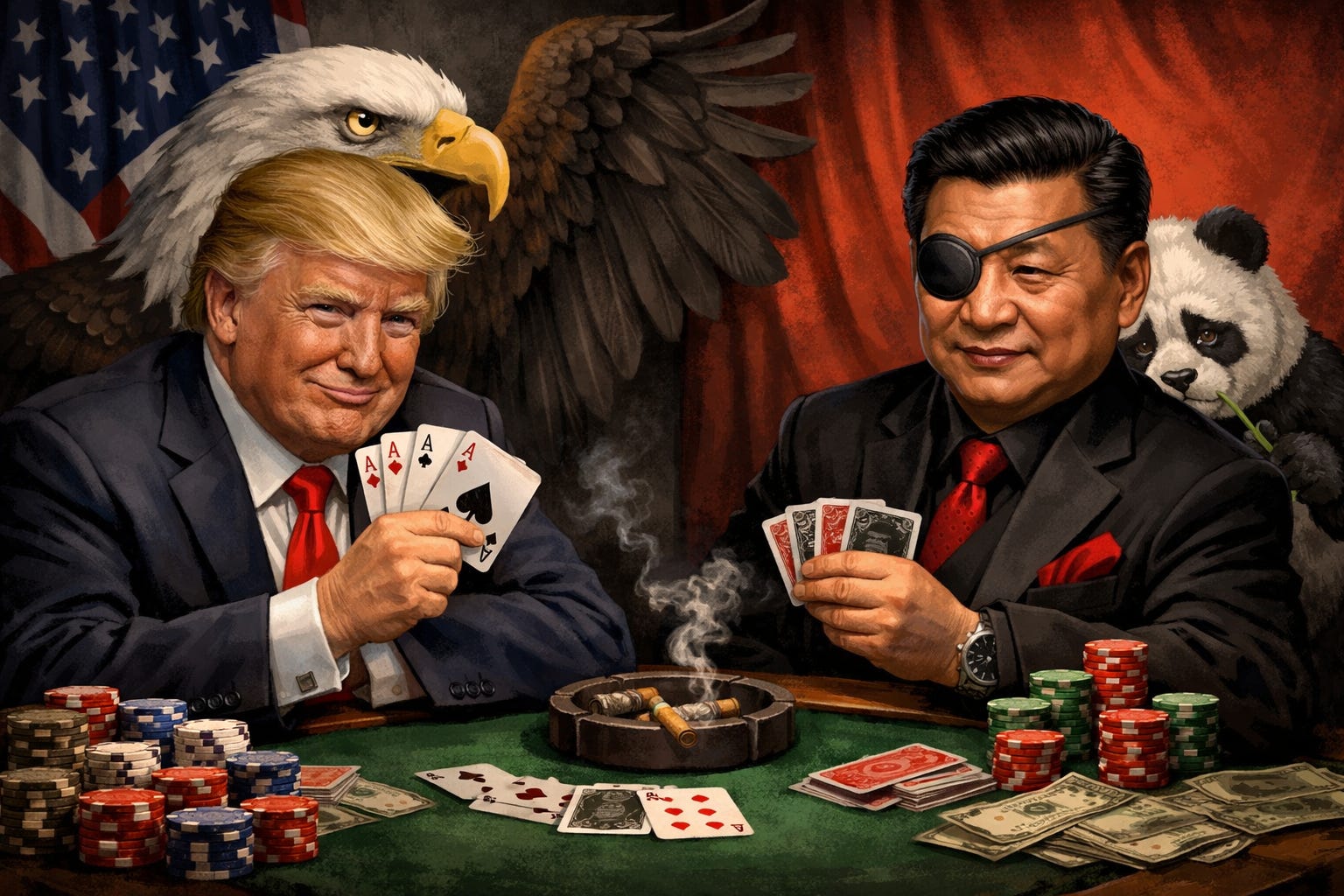
After all, China faces critical risks. Its economy, once projected to inevitably overtake the US economy, remains in crisis amid the aftermath of a deflated real estate bubble and the end of manufacturing growth that depended in part on ever-increasing exports to the United States. China is at the precipice of a demographic cliff. Its population peaked in 2021, and some demographers believe it may lose one-third of its population by 2100.
Xi recently purged the last of his top generals, Zhang Youxia. Opinions abound as to what precipitated the purge and what it foretells. Yet, no analyst believes it indicates happy circumstances.
Amid these challenges, how can Xi make the upcoming summit with Trump a success and maintain the more stable state of affairs that has prevailed in recent months? He can surprise everyone and do something out of character: fulfill US requests for clemency for dissidents and allow their departure to the West.
For example, Trump specifically raised the fate of imprisoned pro-democracy media tycoon Jimmy Lai when he met Xi during a trip in October 2025. In Trump’s first term, US officials and members of Congress hoped Beijing would allow the free media and protests that had existed in Hong Kong to continue. The city had been a relatively free British colony and was to retain its freedoms until at least 2047, 50 years after its 1997 handover.
Xi’s government disabused the world of that hope. In December, a Hong Kong court convicted Lai of national security and subversion violations after years-long proceedings. Others involved in protests that peaked and were crushed in 2019 face lengthy prison sentences. These include those who worked for Lai’s since-abolished Apple Daily newspaper and pro-democracy political leaders like Albert Ho, Leung Kwok-hung, and Joshua Wong.
A decision by Xi to expel Lai and other prisoners, his point having been made, would be an unmistakable sign that he values the better relations with the United States that Trump has supported so far.
To make this option more palatable, the Trump administration could offer a trade. The US government has sanctioned dozens of Chinese officials in Beijing and Hong Kong in relation to the 2019 crackdown. For example, among the sanctioned, Zhang Xiaoming was the director of China’s Hong Kong and Macao Affairs Office in Beijing in 2019, but was demoted and later removed from any position with authority over Hong Kong. Xia Baolong became Beijing’s senior policymaker for Hong Kong only after most protests had been suppressed. Luo Huining was the director of the central government’s Hong Kong Liaison Office, but the seventy-one-year-old left the position in 2023 for a minor, semi-retired Party role.
All of these men supported the repression of protests and Beijing’s 2020 decision to impose the draconian National Security Law that curtailed many of Hong Kong’s political freedoms. However, removing them and other similar Chinese officials from the list of persons sanctioned by the Treasury Department and its Office of Foreign Assets Control would pose no risk to US national security or the financial system. As with the sentences handed down in Hong Kong—actions that are obviously not morally equivalent to US sanctions—the point has nonetheless similarly been made. It is not a defeat to turn the page.
Is such a trade possible? Such bargaining between the United States and China used to occur. Washington used to refrain from sponsoring condemnatory resolutions against China at the U.N. in exchange for dissidents—something I saw firsthand in the George W. Bush administration. China also expelled dissidents like Chen Guangcheng and Liu Xia during the 2010s—in part to avoid creating martyrs should they die in prison.
Some will argue that issues touching on governance and human rights—regarded by China as purely “internal affairs”—are the hardest of all to negotiate with Beijing. However, such a gesture would cost Xi little. It would clearly be appreciated by Trump, given his often-stated concern for Lai, who has become the world’s most famous Catholic layman for his struggle. A trade would advance the stable relations that both leaders appear to desire and make the summit a historic success.

Super interesting framing of how transactional diplomacy could work here. The prisoners-for-sanctions swap idea is actualy pretty clever since it gives both sides a facesaving out. From what i've seen in international relations, these kinds of trades work best when they're structurally symmetrical even if the underlying issues aren't morally equivalent.