

Iran Breakthrough: Good Enough for Government Work?
Islamist regime knocked off balance as new Middle East comes into view.

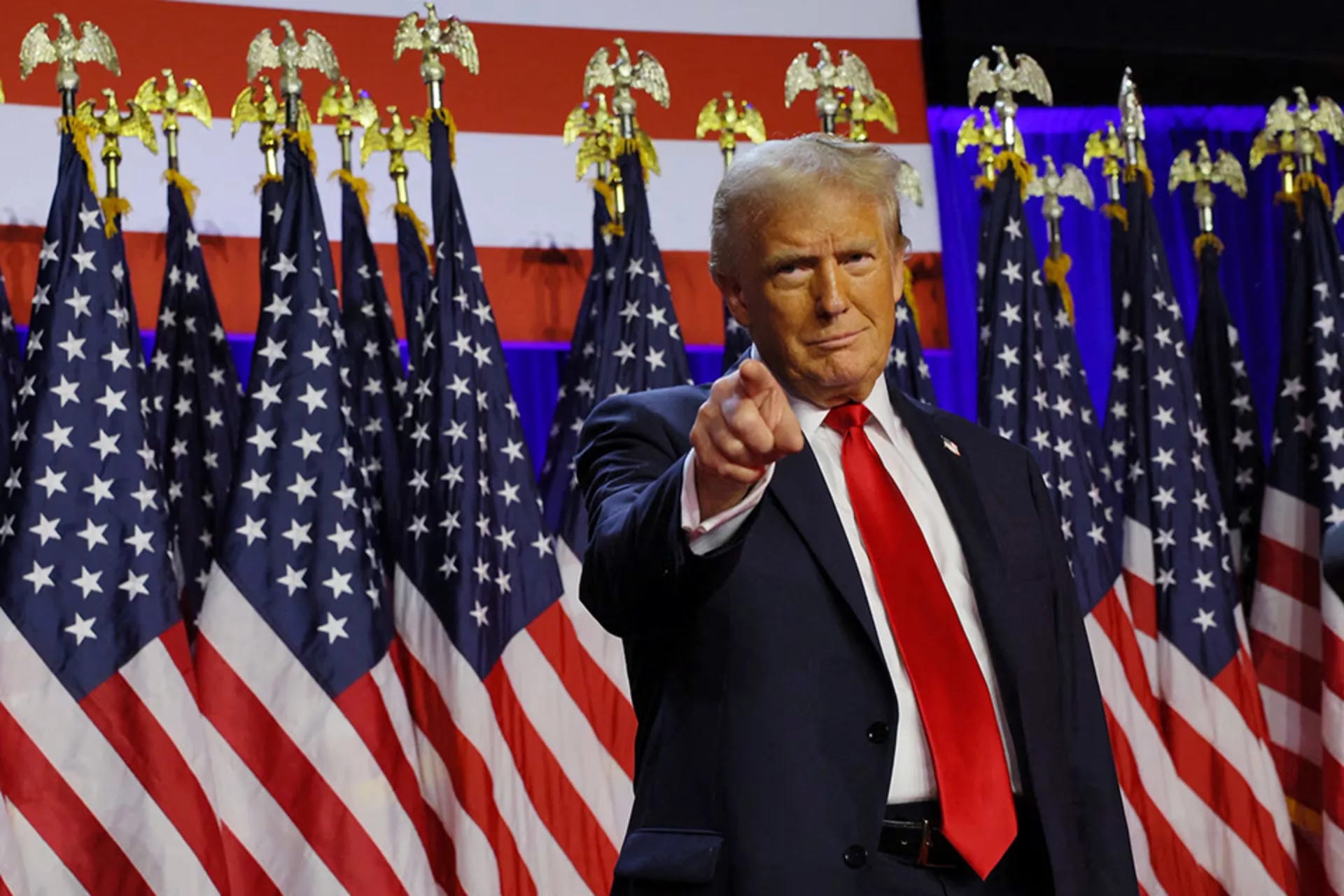
President Donald Trump appeared to call time on the Iran War on Saturday, reporting to the American public a likely agreement with Iran, backed by Gulf Arabs, Pakistan, and Turkey.
The tentative agreement, which Trump said would reopen the Strait of Hormuz to the flow of beautiful oil and gas, isn’t the unconditional victory about which Trump once mused in passing, but it is a win for the United States and the new Middle East that Trump has helped bring into existence.
Before the war, the theocratic, cousin-marrying, terrorism-exporting deviants who run Iran were on the march. Their proxies dominated Iraq through violence and spread terrorism throughout the region, most notably of late with the gruesome invasion of Israel and murder spree against unarmed civilians in October 2023.
They had the blood of thousands of Americans on their hands and wanted a lot more.
Iran was enriching uranium for crude nuclear bombs that would have put it in a position to dominate the energy-rich region. This was the same regime that came to power by taking American diplomats hostage and killing Americans throughout the decades—even planning a mass-casualty attack in Washington that was foiled by the FBI.
Thanks to former President Barack Obama, Iran had a nuclear deal that availed it of the means to produce nuclear weapons—plus literal pallets of cash to fund the program. The regime also got a big assist from Obama’s third term, nominally overseen by dotard Joe Biden but in fact run by Obama staffers and their trusty autopen.
While Trump had sought to undermine Iran with “maximum pressure” in his first term, his far-reaching sanctions were undermined by European “allies” Britain, France, and Germany—along with China, which was the primary consumer of Iranian oil.
The situation was grim.
Now, thanks to Trump and a U.S.-Israeli military offensive aided by Gulf Arab allies, especially the United Arab Emirates, Iran is on the defensive. Its military is decimated. Its proxies Hamas, the Houthis, and Hezbollah are in retreat. The latter group, often considered the most serious, has been on the receiving end of persistent Israeli counterattacks and may finally be pushed out of Lebanese politics.
Early reports indicate Iran may also give up the enriched uranium it may still have. That would be ideal. But even short of that, the U.S.-led coalition has destroyed Iran’s centrifuge cascades—the means by which it can enrich uranium to weapons grade. Any attempt to reconstitute this capability will be observable. At that point, the United States and its allies can always return to “mow the lawn.” They can do so with more pinpoint strikes or, as I have advocated, overwhelming force.
Hopefully Iran is smart enough to allow removal of the uranium—likely buried in possibly ruptured canisters of uranium hexafluoride used to feed centrifuge cascades—in exchange for a persistent ceasefire and sanctions relief.
This achievement is more than just the proverbial “half a loaf” of bread. It is most of the loaf.
Those who opposed the war—almost every single Democrat and much of the Washington uniparty blob—will now say that Trump got too little.
The neocons and Capitol Hill hawks are particularly upset.
Neocon Robert Kagan, the Earl of Sandwich, called a prospective negotiated peace a “surrender” and added: “Most likely, the new normal in the Persian Gulf will be chronic instability and frequent disruptions in shipping. That’s what happens when the hegemon cedes hegemony.”
But Trump, like the American people, never wanted “hegemony.” He just wanted Iran not to have a nuclear weapon, kill Americans, or disrupt global energy markets.
The neocons are upset that Trump’s limited bombing did not effect regime change in Iran, which they presume would lead to liberal democracy and alliance with the United States. But this was never a likely outcome absent a full U.S. invasion. Furthermore, Iran has no democratic tradition, and Persia has been a problem for the West more often than not since about the fifth century BC.
Speaking for the hawks on Capitol Hill, Mississippi Republican Senator Roger Wicker, the pointless chairman of the Armed Services Committee, moaned that Trump “is being ill advised to pursue a deal that would not be worth the paper it is written on.”
Yet these same pointless senators have been screaming at Trump to resolve gasoline and diesel prices that have spiked since the war began. Wicker’s proposed solution: “I also believe we can diversify our future energy supply through the use of alternative and renewable energy.” He added the perpetual Republican Lucy-with-the-football, promise-but-never-deliver solution (thanks in part to an undemocratic filibuster that renders the Senate useless): “I support exploring for oil and gas in the Arctic National Wildlife Refuge.”
Even if these solutions were approved tomorrow, they would take years to affect prices.
Go back to face your disappointed constituents who mistakenly thought they elected a conservative fighter, Roger.
Some other key points:
Reopening the Strait of Hormuz to all traffic will not just alleviate high gas prices for Americans; it will also stave off crisis for allies in East Asia. While it has been enjoyable watching China squirm as its source of below-market-cost Iranian oil has been crimped, the impact has also hurt our friends. Japan, which is further expanding its massive increase in defense spending, dipped into emergency oil supplies and paid poorer countries. The Philippines, which has a pro-U.S. government and is already fighting back low-intensity conflict from China at sea, was rationing gas.
Unlike the arrogant moochers of Europe, who ostentatiously refused to help the U.S. military in our moment of need, these Asian allies quietly shouldered the burden of the energy crisis, understanding the goal Trump was seeking.
The Strait of Hormuz will never again be as important as it was during this crisis. The U.A.E. is halfway done with an expanded pipeline to the Gulf of Oman that skips the Strait of Hormuz. The Saudis are expanding efforts to pipe product directly to the Red Sea. No one serious cares if the duplicitous Qataris can’t get gas to market; they deserve whatever ill comes their way. The War Department, which was inexplicably unprepared for the closure despite multiple warnings, now understands that a future operation must come with a “blue carpet” of allied air and naval assets to dominate the Strait.
Easing sanctions on Iran in return for nuclear compliance is a low cost for an excellent prospective outcome. It is unfortunate that the Trump administration does not appear willing to contemplate the step that will immediately cut gasoline prices further: dropping sanctions on Russia.
As my colleague Mark Simon has written, not all of Iran’s leadership is ideologically driven. Some are just crooks and crooks with whom we can deal, just as we must do around the globe: “We must face the hardest truth of international affairs: we rarely get exactly what we want; we simply choose the least-bad alternative.”
Israeli Prime Minister Bibi Netanyahu was cut out of the final deal, but Israel’s position has been dramatically improved. Its partnership with the U.S. and U.A.E. will continue to reshape the Middle East, the Horn of Africa, and beyond. Bibi may be out of power and off to jail with the war over, but the alliances that matter are strengthened and will live on.
The Iranians are the biggest losers, but they are followed closely by the Europeans. NATO is on life support. It now competes with the United Nations as a venue for preening diplomats who hate America but indignantly demand and expect to mooch off us. Trump may unfortunately not pull the plug formally on NATO, but hopefully he will “quiet quit” the organization. He should expand alternatives to NATO, like annexing American Greenland and seeking bases in Morocco, America’s oldest ally. Europeans can thank America for securing their energy supply again and go back to memorizing the Koran.
Then there are the Democrats. They will say that Trump fought an expensive war that raised prices for Americans and got nothing in return. The public, which instinctively grasps the threat of Iran better than the palace eunuchs of Washington ever did, won’t buy this. Nor will they care much as the price of gas recedes and the economy, currently growing faster than 4%, roars ahead. The end of the war gives Trump a free hand to begin campaigning in earnest.
Trump appears to have achieved a major national security breakthrough. He has helped create a new Middle East as part of a broader new world order—based on a revived United States, a reforming Latin America, and an arc of prosperity that runs from America through Northeast Asia to the Middle East. His opponents can whine as they watch history being made from the sidelines.

I like your outlook.